
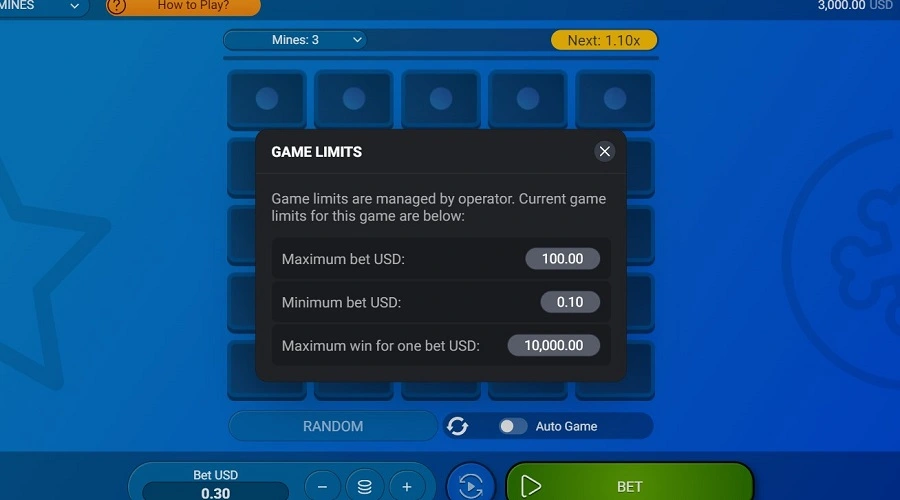
Hello UK players https://minesgames.eu/. Have you ever wondered what's really going on when you select those squares in Mines Game? We're pulling back the curtain. This isn't just about luck. It's a world of probability, and we're going to walk through the core maths. You can convert guesswork into a clear strategy for your next session.

Enjoying Mines Responsibly in the UK
Mines Game is recreation. Grasping the maths improves your understanding and refines your decisions. Always play within your budget. Employ tools like deposit limits, which are available at UK-licensed platforms. Let the numbers guide your fun. The best strategy is the one that ensures the game fun. Play for the thrill of the puzzle, not just the potential payout.
How Odds Move Through Every Reveal
Likelihood never remains static. Following a safe first click, the grid alters. Now, 21 secure spots and 3 mines remain out of 24 squares. Your next click offers an 87.5% chance of safety. This small drop persists with every safe reveal. Building a feel for this flow is how you handle risk. The odds update instantly, generating a new mathematical puzzle with every move.
Strategic Tips Based on Maths
Let probability guide you. Commence with lower mine counts to understand the odds. Set a cash-out target before you play. Never chase losses by thinking the 'next one must be safe'. Remember, the house edge is always there. Handling your bankroll well is just as crucial as understanding the grid. Consider each session as a series of independent events, not a connected story.
What Exactly Is the Mines Game?
Mines is a game of fortune and nerve. You encounter a grid, usually 5×5, hiding several explosive mines. Your goal is to uncover safe squares and steer clear of the mines. Each safe click displays a cash prize multiplier. The real tension comes from deciding when to cash out before your luck runs out. It's a true test of risk, admired for its simple, tense gameplay.
Understanding the Game Grid and Configuration
You need to comprehend the board before calculating odds. A typical 5×5 grid has 25 entire squares. Before you click, the game haphazardly places a set number of mines. You'll often see 3, 5, or more mines. This starting setup is crucial. It determines the entire probability landscape for your round. Every choice you make stems from this concealed layout.
Weighing Risk vs. Reward
The game's excellence is in its balance. More mines mean higher potential multipliers, but your odds of survival decrease. Choosing 3 mines in place of 5 totally changes the probability landscape. You have to weigh the tempting reward against the statistical chance of getting it. This calculation lies at the heart of every decision. The rising multiplier is meant to lure you as the safety rate declines.
The Fundamental Probability: Your Initial Click
Begin with the most secure bet. On a 5×5 grid with 3 mines, 22 squares are safe. Your first click has a 22/25 probability of being secure. That's an 88% probability. This great initial assurance lets the game commence smoothly. It's a built-in advantage, a strong foundation. Many probability-based games employ this favourable start to attract players in.
The Cash-Out Dilemma: A Numbers Perspective
At what point do you secure your profits? It's a classic probability problem. Every fresh click presents a larger reward but threatens total loss. The perfect moment is personal. However, the maths shows that chasing very high multipliers usually lowers your expected value. Wise players understand their boundary. Setting a profit target before you play is a disciplined, mathematically sound habit.
Predicted Average: The Long-Term Picture
Expected Value (EV) shows you average returns over time. It combines every potential result, its worth, and its likelihood. A lone spin is erratic, but EV offers a strategic framework. For example, a steady strategy using low mine counts and early cash-outs might give you a more reliable positive EV. This notion is the bedrock of shrewd, calculation-driven play.
Widespread Fallacies and Misconceptions Debunked
Many players believe in "due" hits or patterns. This is the gambler's fallacy. Each click is an independent event. Past reveals don't influence future ones. The grid is fixed at the start. Believing otherwise leads to costly mistakes. Rely on the cold, hard maths, not superstition. The random number generator has no memory and no sense of fairness.